WWII History Ride: Exploring Liberation on Vintage…
Dr. Annette Baumgartner ·
Listen to this article~4 min
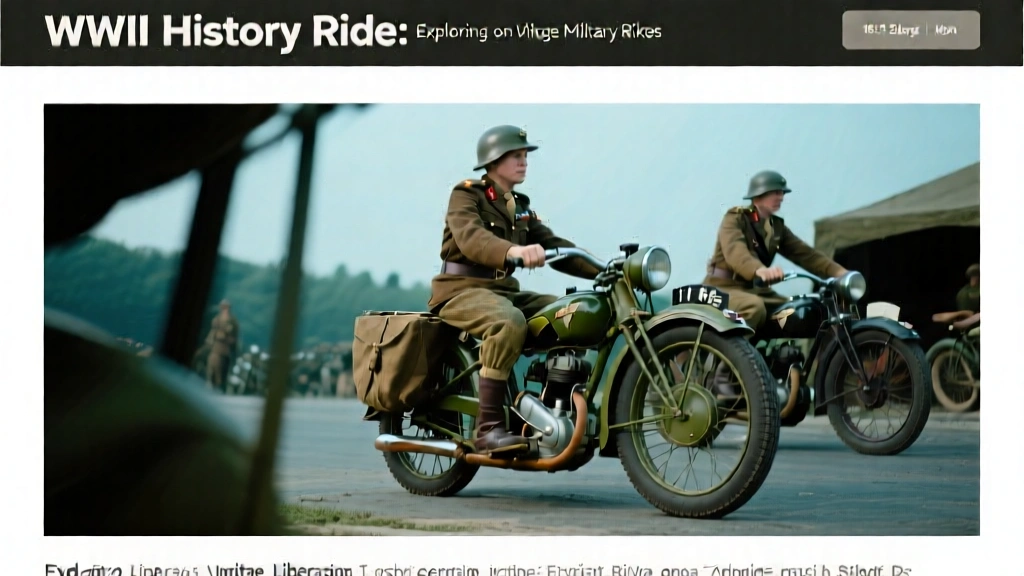
Enthusiasts explore WWII liberation history on a unique cycling tour using authentic vintage military bicycles, commemorating the 75th anniversary in Belgium and the Netherlands.
Imagine pedaling through history, not just reading about it. That's exactly what a group of enthusiasts from Belgium and the Netherlands are doing. They're exploring a special cycling route dedicated to the Second World War, but here's the twist: they're doing it on authentic military vintage bicycles. It's a rolling tribute to the 75th anniversary of the liberation, and it brings a whole new, tangible layer to understanding the past.
This isn't your average weekend bike tour. We're talking about a journey that connects the dots between key historical sites from the 1944-1945 period. The route winds through landscapes that were once battlefields, past monuments, and through towns that remember the struggle for freedom. Riding these old military bikes adds an incredible sense of authenticity—you're literally traveling on the same type of machinery that might have been used during the war era.
### Why Vintage Bikes Make the Difference
It's one thing to visit a museum. It's another to feel the weight of history beneath you. These oldtimerfietsen, or old-timer bikes, are more than just transportation; they're time machines. The creak of the leather seat, the specific geometry of the frame designed for utility, the simple mechanics—it all creates a direct, physical link to the soldiers and civilians of the 1940s. Participants report that it changes your perspective entirely, making the history feel immediate and personal.
### The Route: More Than Just Miles
The cycling route itself is carefully curated. It's not about logging the most miles; it's about meaningful stops and reflection. Organizers have mapped out a path that highlights:
- Key liberation sites from the Allied advance.
- Memorials dedicated to both military personnel and civilian resistance.
- Locations of significant wartime events that shaped the region's history.
- Areas that showcase the rebuilding and resilience in the years following 1945.
This approach turns a physical activity into an educational pilgrimage. You're not just getting exercise; you're engaging in an act of remembrance with every turn of the pedal.
As one participant put it, "You read the dates in a book, but here you feel the distance between the events. You understand the terrain. On these bikes, you gain a humble appreciation for what that generation endured."
### The Lasting Impact of Experiential History
So, what's the big takeaway from an event like this? It proves that history doesn't have to be confined to pages or glass cases. By actively participating—by riding the route, feeling the effort, and sharing the experience with others—the lessons of the Tweede Wereldoorlog (Second World War) and the celebration of 75 Jaar Bevrijding (75 Years of Liberation) become deeply ingrained. It fosters a connection that a passive tour simply can't match.
This initiative shows a growing trend toward immersive historical education. It's for anyone with an interest in WWII history, cycling, or unique travel experiences that offer more than just a photo op. It’s about creating a living memory, ensuring that the stories of courage, sacrifice, and freedom continue to resonate powerfully for generations to come. If you ever get the chance to join such a ride, take it. Your understanding of history will never be the same.