WWII History Bike Tour: Veterans Ride Military Bicycles in Belgium
Dr. Annette Baumgartner ·
Listen to this article~4 min
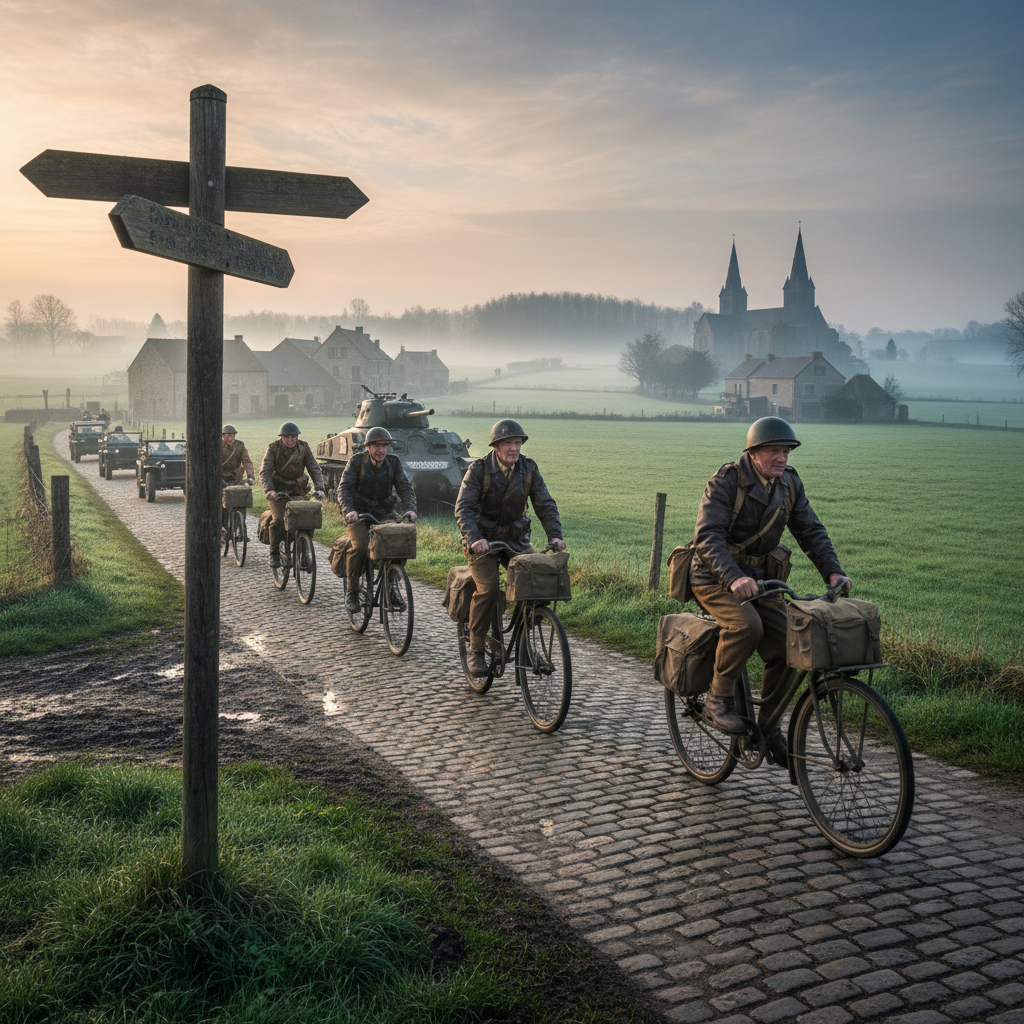
A unique historical bike tour in Belgium sees participants riding vintage military bicycles along WWII liberation routes, offering a tangible connection to the 75th anniversary of freedom.
You know, sometimes the best way to understand history isn't from a book or a museum. It's by feeling the road beneath you, pedaling the same paths, and seeing the landscape through a similar lens. That's exactly what a remarkable group of participants from Belgium and the Netherlands recently did. They embarked on a unique cycling expedition, exploring routes tied to the Second World War, but with a twist that makes all the difference. They rode authentic military vintage bicycles, the very kind used by soldiers during the 1944-1945 liberation period.
This isn't your average weekend bike tour. It's a rolling, breathing tribute to the 75th anniversary of Belgium's liberation. Think about that for a second. Seventy-five years. The participants, many with deep personal or familial connections to the war, aren't just sightseeing. They're retracing steps, honoring memory, and connecting with a pivotal chapter in European history in the most tactile way possible.
### The Route and Its Significance
The bike route itself winds through key historical areas in Belgium. We're talking about regions that saw intense fighting, heroic resistance efforts, and the final push of Allied forces. Riding these paths on period-correct bicycles adds a layer of authenticity that's hard to replicate. You're not just told about the distances soldiers covered; you experience the effort, the terrain, and the perspective firsthand, albeit in a peaceful context.
The journey serves as a powerful, mobile memorial. It connects towns and monuments, creating a living narrative of the war's end in Western Europe. For the riders, it's a profoundly personal way to engage with the past, especially for those honoring specific family members or units that fought there.
### The Bicycles: More Than Just Transport
Let's talk about those bikes. They're not modern hybrids or sleek road bikes. These are restored military "oldtimerfietsen" – vintage workhorses from the 1940s. They're sturdy, simple, and built for utility over speed. Riding one immediately changes your relationship to the journey.
- **Authenticity:** Each bicycle is a piece of history. The feel of the ride, the sound of the mechanics, it all contributes to a deeper historical immersion.
- **Physical Connection:** It creates a tangible link to the soldiers who relied on similar bicycles for transport, communication, and logistics.
- **Pace:** The bicycles enforce a slower, more contemplative pace, perfect for reflecting on the significance of each location.
As one organizer noted, "You see the country differently from the saddle of a history-laden bicycle. Every hill, every cobblestone street tells a part of the story."
### Why This Matters for History Professionals
For historians, educators, and cultural strategists, especially those in the U.S. focusing on European WWII history, this event is a fascinating case study. It demonstrates an innovative approach to public history and commemorative tourism. It moves beyond static exhibits to create an experiential, community-driven learning opportunity.
The project highlights how physical engagement can foster a deeper emotional and intellectual connection to historical events. It's a model that could inspire similar initiatives elsewhere, using locally significant artifacts and routes to make history accessible and impactful.
Ultimately, this bicycle tour is more than a ride. It's a act of remembrance, a lesson in resilience, and a beautiful example of how we can keep the past alive not just in our minds, but in our muscles and our hearts. It reminds us that history isn't always behind glass—sometimes, it's waiting for you on two wheels, ready to take you on a journey through time.