Walking Through History: Leuven's WWII Sites and Stories
Dr. Annette Baumgartner ·
Listen to this article~4 min
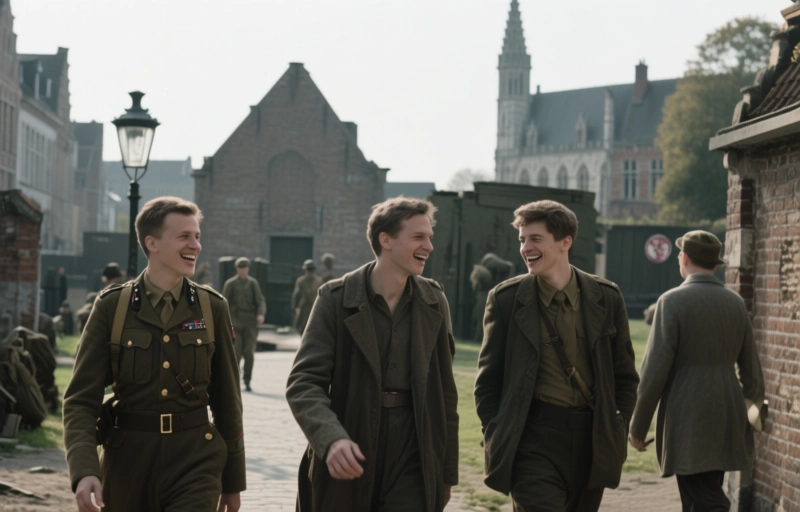
Explore Leuven's WWII history on foot. Discover how the city's landmarks, from the University Library to the Grote Markt, bear witness to occupation, resistance, and liberation, offering a powerful, tangible connection to the past.
Walking through Leuven today, you'd be forgiven for thinking it's always been this peaceful university town. The cobblestones, the Gothic architecture, the students buzzing around—it feels timeless. But if you know where to look, the city whispers stories from a much darker chapter. We're talking about the Second World War, when Leuven found itself caught in the crossfire of occupation, resistance, and eventual liberation.
It's one thing to read about history in a book. It's another to stand on the very ground where it happened. That's what makes a walking tour here so powerful. You're not just learning dates; you're connecting with the tangible past. Let's explore some key spots that tell Leuven's wartime story.
### The University Library: A Symbol of Resilience
You can't miss the towering University Library on Mgr. Ladeuzeplein. Its bell tower is a city landmark. But this beautiful building holds a painful memory. In both World Wars, it was deliberately set on fire, destroying hundreds of thousands of irreplaceable books and manuscripts. The first fire in 1914 was a shocking act of cultural destruction. Then, it happened again in 1940.
Walking past it now, you see a phoenix risen from the ashes. The current building, completed in the 1920s, was funded by American donations—a symbol of hope and rebuilding. It stands as a quiet but firm reminder: you can burn books, but you can't erase knowledge or the human spirit's will to preserve it. It makes you think about what we choose to rebuild and why.
### The Grote Markt and Town Hall
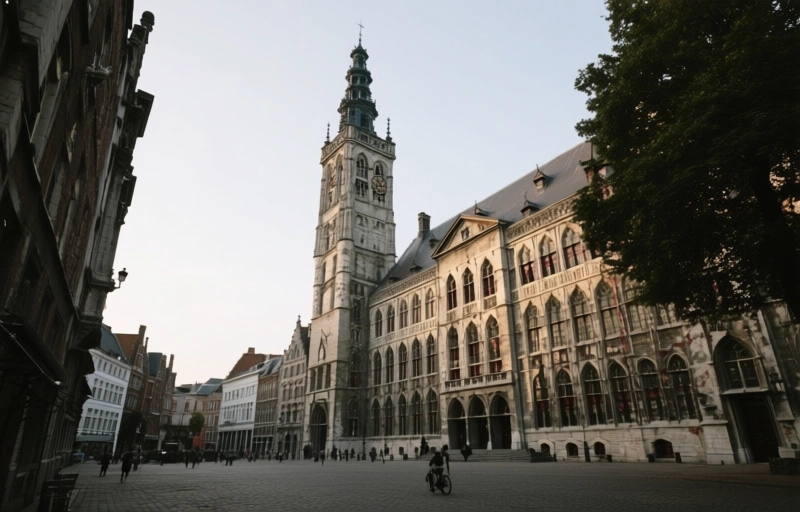
The heart of any Belgian city is its main square, and Leuven's Grote Markt is no exception. Flanked by the stunning, lace-like Town Hall, it's usually full of life. During the war, this space witnessed very different scenes. It was a place of German parades and demonstrations of power, but also a covert meeting point for the resistance.
The Town Hall itself, miraculously, survived the war mostly intact. While other cities saw their historic centers reduced to rubble, Leuven's Gothic gem was spared the worst of the bombing. Standing there, you realize this square has seen occupation, fear, secret communications, and finally, the overwhelming joy of liberation in 1944. The stones have absorbed it all.
### Remembering the Human Cost
Beyond the grand buildings, the war's true impact was on the people. A walking tour should make space for their stories.
- **The Resistance:** Ordinary citizens who risked everything to hide Allied airmen, distribute clandestine newspapers, and gather intelligence.
- **The Deportations:** The haunting memory of Leuven's Jewish community, many of whom were taken from their homes and did not return.
- **The Liberation:** The arrival of British forces in early September 1944, which didn't end the hardship immediately. The brutal Battle of the Bulge was still to come, keeping the region on edge for months.
One local historian I spoke to once said, "We remember not to dwell in the past, but to understand the fragility of peace." That sentiment sticks with you as you walk.
### Planning Your Own Reflective Walk
So, how do you experience this? You don't necessarily need a formal tour, though they offer incredible depth. You can create your own route. Start at the University Library, then meander toward the Grote Markt. From there, walk to the Dijle river and the Begijnhof. This tranquil beguinage, a UNESCO site, offered quiet refuge during chaotic times.
Take it slow. Read the plaques on buildings—they often note reconstruction dates like "1940-1948." Look for the subtle scars. The goal isn't to have a morbid experience. It's about honoring a complex history and appreciating the peace we often take for granted. Leuven doesn't shout its wartime past; it invites you to listen closely. And in that quiet listening, the lessons become personal.