Last-Minute Tank Battle: The Liberation of Winterswijk
Dr. Annette Baumgartner ·
Listen to this article~4 min
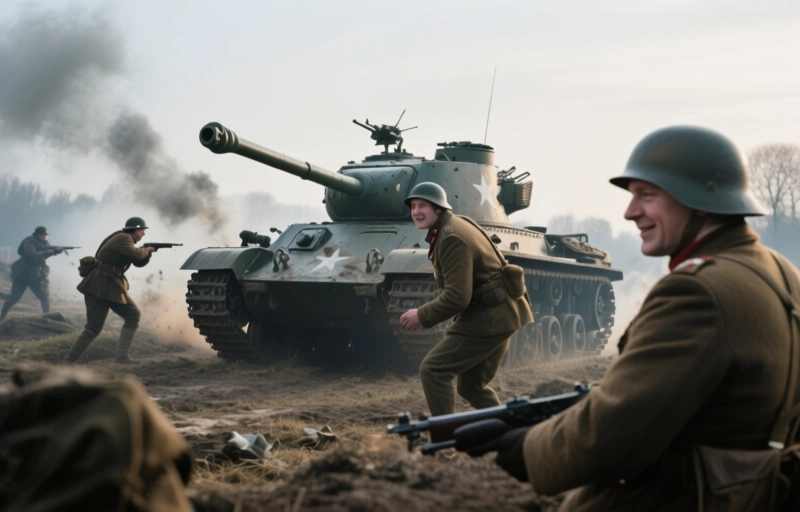
81 years ago, a desperate last-minute tank battle liberated the Dutch town of Winterswijk. This fierce clash on the edge of freedom marked a crucial, often-overlooked moment in the final push to end WWII in Europe.
You know, sometimes history happens in the final moments. It's not always a grand, sweeping campaign. Sometimes, it's a desperate, last-gasp fight that changes everything. That's exactly what happened 81 years ago in a small Dutch town called Winterswijk.
This wasn't just another skirmish in the vast landscape of World War II. This was a tank battle fought on the very doorstep of liberation, a final, brutal clash as Allied forces pushed into the Netherlands from the east. The German army, knowing the end was near, dug in for one last stand.
### The Setting: A Town on the Edge
Picture Winterswijk in early 1945. The war had dragged on for years. Hope was a fragile thing, worn thin by occupation and hardship. Then, the rumble of Allied tanks grew louder from the German border, just miles away. For the people hiding in their cellars, that sound meant freedom was tantalizingly close, yet still terrifyingly out of reach.
The German forces, a mix of weary veterans and desperate conscripts, were ordered to hold the line. They set up defensive positions in the town's outskirts, using the familiar terrain to their advantage. They knew if Winterswijk fell, the road deeper into the Netherlands would be open.
### The Battle: Thunder at the Eleventh Hour
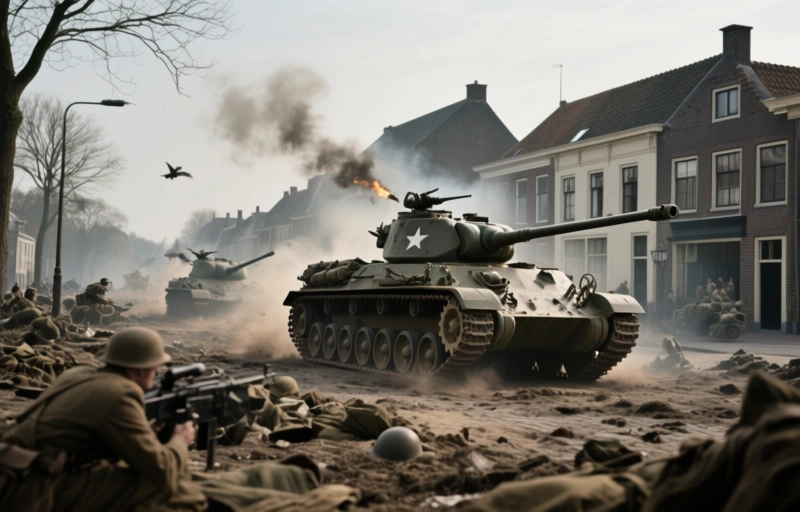
The attack came not with subtlety, but with the raw power of armored columns. Canadian and British units, part of the larger push from Operation Market Garden's aftermath, engaged in intense urban combat. House-to-house fighting erupted. The cobblestone streets, usually quiet, echoed with the roar of tank cannons and the crack of rifle fire.
It was messy, chaotic, and decisive. The Allied troops faced determined resistance. Every street corner, every farmhouse, became a potential stronghold. But their momentum and firepower eventually overwhelmed the German defenses. In military terms, it was a classic combined arms assault. In human terms, it was the violent, necessary price for a town's freedom.
### The Aftermath and Legacy
When the guns fell silent, Winterswijk was free. The cost was steep—lives lost on both sides, buildings reduced to rubble. But for the first time in years, people could walk outside without fear. They could take down the blackout curtains. They could speak freely.
This battle, often overshadowed by larger events like the Battle of the Bulge, holds crucial lessons. It reminds us that liberation rarely comes easily. It's often won in these gritty, forgotten fights in places the history books sometimes skip.
As one local historian later noted, "We thought the war had passed us by. Then, in the final days, it came to our doorstep with a vengeance."
- **Strategic Importance:** Controlling Winterswijk secured a vital corridor for supplying the northern Allied advance.
- **Human Cost:** Civilian casualties and displacement were significant, a sobering reminder of war's true toll.
- **Symbolic Victory:** The liberation provided a massive morale boost for the entire region, proving the Nazi grip was finally breaking.
So why does this matter to us now, especially from an American perspective? It connects to the broader narrative of the 75th anniversary of liberation celebrations across Belgium and the Netherlands. It's a piece of the puzzle. American GIs were fighting and dying in the Ardennes just weeks before. The push that freed Winterswijk was part of that same relentless drive to end the war.
Remembering these specific stories—the tank battle on the verge of peace—grounds the huge, abstract concept of 'World War II' in something real. It was about towns, streets, and families. It was about a last-minute fight for a future that, 81 years later, we are privileged to live in. Their struggle, in those final, violent hours of occupation, is why we must never take our peace for granted.