Last-Minute Tank Battle: The Liberation of Winterswijk
Dr. Annette Baumgartner ·
Listen to this article~4 min
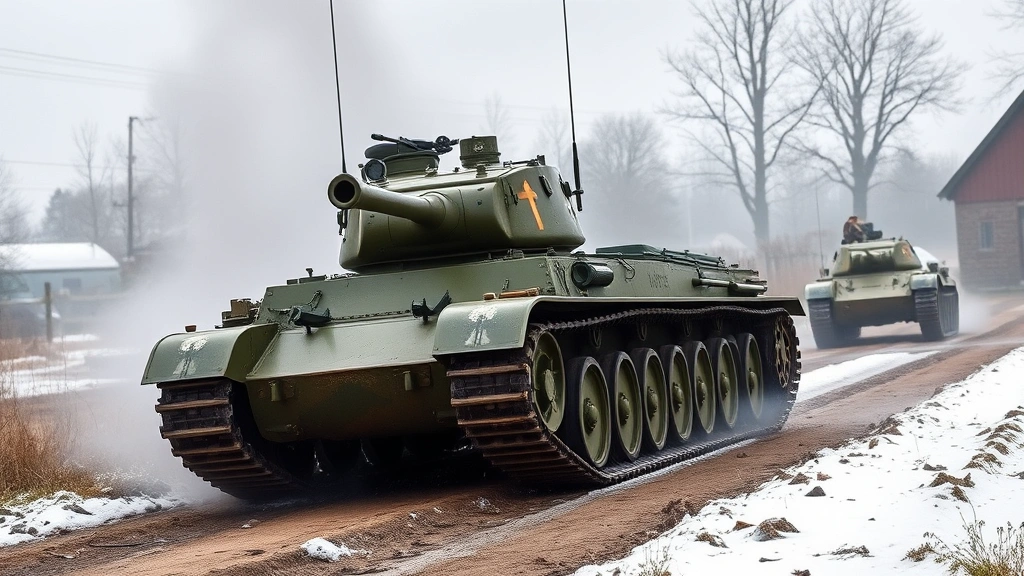
81 years ago, a desperate last-minute tank battle liberated Winterswijk. Explore the chaotic final clashes of WWII that brought freedom to a Dutch town at the war's very end.
Eighty-one years ago today, the final chapter of a brutal war was being written in a small town near the Dutch-German border. It wasn't a grand, sweeping offensive. It was a desperate, last-minute tank battle that would finally bring freedom to Winterswijk.
We often think of World War II's liberation as a steady, unstoppable march. The reality on the ground was far messier. For towns like Winterswijk, freedom arrived in fits and starts, often hanging by a thread until the very last moment.
### The Battle at the Eleventh Hour
As Allied forces pushed eastward in the spring of 1945, German resistance became increasingly fragmented but no less fierce. Winterswijk, a town that had endured years of occupation, found itself caught in this chaotic final phase. The liberation wasn't a single event but a series of intense clashes.
Local accounts describe the sound of approaching tanks as both terrifying and hopeful. You could feel the ground shake. Families huddled in basements, not knowing if the next explosion would bring liberation or destruction. It was warfare at its most intimate and brutal.
### The Human Cost of a Final Push
What's often lost in the history books is the sheer exhaustion on all sides by April 1945. The Allied soldiers had been fighting for months across Europe. The German defenders were often young conscripts or battle-weary veterans. And the civilians? They were just trying to survive one more day.
The battle for Winterswijk involved Sherman tanks and German Panzers in close-quarters combat. Imagine the noise—the roar of engines, the screech of metal, the deafening blasts in narrow streets. It was a violent, confusing end to a long nightmare for the town's residents.
### Why This Battle Still Matters
Remembering these final battles is crucial. They remind us that liberation is never a simple gift. It's earned through tremendous courage and sacrifice. The soldiers who fought in Winterswijk weren't just securing a town; they were ending a reign of terror for its people.
As one historian noted, "The last battles are often the most forgotten, yet they represent the final, desperate struggle between tyranny and freedom."
For the people of Winterswijk, the arrival of Allied troops meant:
- The end of five years of oppressive occupation
- The return of basic freedoms and human dignity
- The beginning of a long, difficult recovery
- A chance to rebuild shattered lives and communities
### A Legacy of Freedom
Today, the quiet streets of Winterswijk bear little evidence of that violent spring day. But the memory is preserved in monuments, in stories passed down through families, and in the simple fact of a town that remains free. The last-minute tank battle secured a future that previous generations could only hope for.
It's easy to view World War II as ancient history. But eighty-one years isn't that long. There are still people among us who remember the sound of those tanks, who felt the mix of fear and hope as their world changed forever. Their stories connect us directly to that pivotal moment.
We remember not just the victory, but the cost. We honor the soldiers who fought in a confusing, dangerous battle at the war's very end. And we acknowledge the resilience of a town that waited years for its freedom, only to have it decided in a furious, final clash of armor on its doorstep. That's the real story of liberation—complicated, costly, and ultimately human.