Belgium's WWII Liberation: The 75th Anniversary Story
Dr. Annette Baumgartner ·
Listen to this article~5 min
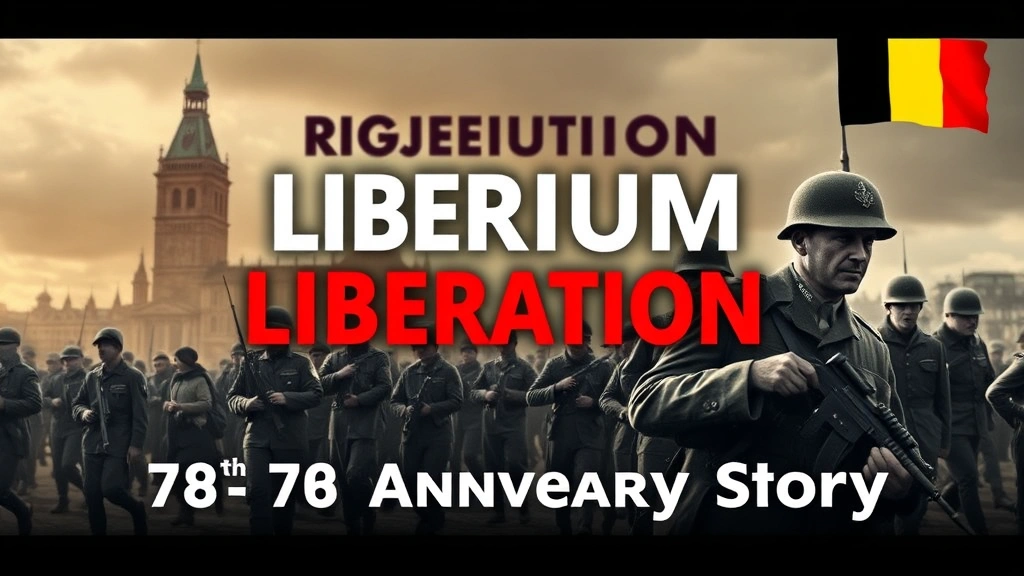
Explore the complex story of Belgium's WWII liberation during its 75th anniversary. Beyond the joyous parades lay a painful process of regional disparity, the Battle of the Bulge, and a nation confronting its full history.
You're probably wondering what it was really like in Belgium during that final, tumultuous year of the Second World War. Honestly, it's a story of stark contrasts. A brutal, grinding occupation suddenly gave way to a swift, chaotic, and profoundly hopeful liberation. The period from September 1944 through the final surrender in May 1945 wasn't just the end of the war in Belgium. It was a seismic shift that reshaped the nation's identity.
Anniversaries come and go, I get that. But the 75th anniversary of the liberation, known as '75 Jaar Bevrijding,' felt different. It wasn't just about looking back. It sparked a collective, national conversation about memory, sacrifice, and what freedom actually costs.
### The Bittersweet Reality of Liberation
Most people picture liberation as one big, joyous street party. And sure, that happened. The images from Brussels in early September 1944 are iconic for a reason. Allied troops rolling in, the Belgian flag suddenly unfurled from windows where it had been hidden for years. It was pure euphoria.
But that's only part of the picture. The Allied advance after D-Day was lightning-fast—maybe too fast. By mid-September, most of the country was technically free. Yet the front line stabilized, leaving parts of eastern Belgium, like the Ardennes, still under German control.
Liberation wasn't a single day. It was a process. For some towns, freedom didn't arrive until February 1945.
### The Shadow of the Battle of the Bulge
Then came the Battle of the Bulge. That massive German counter-offensive in December 1944 plunged the Ardennes back into hell. Towns that had tasted freedom for a few months were re-occupied. Civilians were caught in the crossfire of one of the war's most brutal battles.
You had this bizarre, heartbreaking situation. Brussels was celebrating Christmas in relative peace, while Bastogne was under siege just over 80 miles away. That disparity defined the experience.
The 75th anniversary events highlighted these regional differences. They told stories from the coast to the German border because the war didn't end everywhere at once.
And the winter of 1944-45? It was merciless. Food and fuel shortages didn't magically disappear with the retreating Germans. The economy was shattered. Infrastructure was a mess. The psychological scars ran deep.
The liberation was a military victory, but the real work of rebuilding a society was just beginning.
### Beyond the Parades: Confronting Complex Memory
Memory is complicated. It's not a static monument. It's a living, sometimes argumentative, conversation. For decades, Belgium's public remembrance focused on the heroic—the Resistance, the Allied soldiers, the joy of liberation.
That's important, it really is. But the 75th anniversary prompted a more nuanced look. It asked harder questions.
What about the collaborators? The difficult choices ordinary people had to make just to survive? The dark chapters of the persecution of Jews and Roma? Modern commemorations don't shy away from this.
As one historian noted during the anniversary, "True remembrance requires looking at the full spectrum of human experience, not just the parts that make us comfortable."
Places like the Kazerne Dossin museum in Mechelen—the former transit camp to Auschwitz—serve as a powerful, somber counterpoint to the military parades. The focus isn't just on the tragedy, but on the individual stories, the names, the faces.
### The Liberation Route: History You Can Walk
There's also the fascinating 'Liberation Route' they've developed. It's not a single path, but a network of listening posts and trails across the country. You can stand at a spot in the Ardennes forest, scan a QR code, and hear a firsthand account.
- A soldier who fought there in sub-zero temperatures.
- A civilian who hid in a cellar for weeks.
- A nurse who treated the wounded.
It personalizes history in a way no textbook ever could. You're not just reading about events. You're standing where they happened, hearing the voices of those who were there.
The 75th anniversary wasn't a endpoint. It was part of an ongoing dialogue. It reminded us that liberation is more than troops arriving in a city. It's a messy, painful, and ultimately hopeful process of reclaiming a nation's soul, piece by piece, story by story.