Belgium's Liberation: The Bitter Road to Freedom 1944-1945
Dr. Annette Baumgartner ·
Listen to this article~5 min
Belgium's liberation from 1944-1945 wasn't a simple victory. It was a brutal, chaotic journey from Nazi occupation to fragile freedom—a story of triumph, loss, and national healing that still defines Belgium today.
You know, when most people think about Belgium in World War II, they remember the 1940 invasion and occupation. That's where the story starts, but it's not where it ends. The real heart of Belgium's national memory—the part that still echoes today—is what happened from 1944 to 1945. That period wasn't just an ending. It was a brutal, chaotic, and ultimately triumphant final chapter that completely reshaped the country.
You might wonder how a nation transitions from four years of Nazi rule to freedom in just months. More importantly, you might ask what that freedom actually cost. That's what Belgium Remembers 1944-1945 is all about, and it's why the 75th anniversary commemorations still resonate so deeply.
### The Bitter Road to Freedom
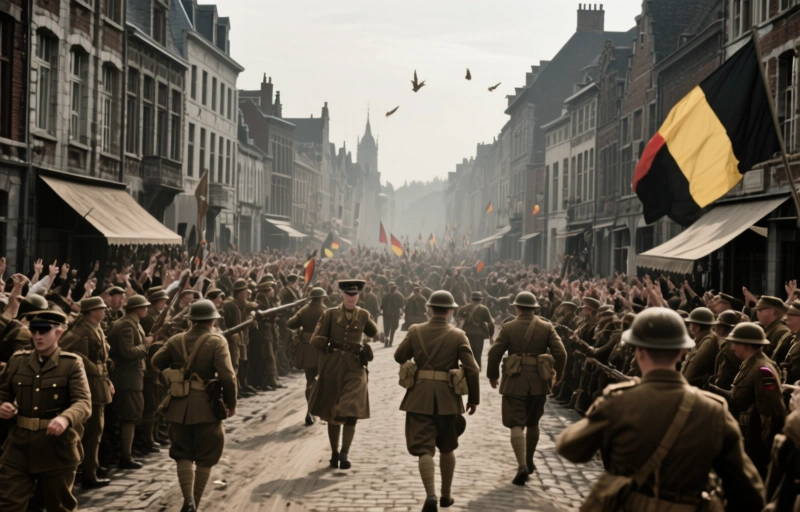
September 1944 brought this incredible wave of euphoria. Allied forces swept across the border, liberating towns like Tournai and Mons almost overnight. Streets filled with cheering crowds who believed the nightmare was finally over.
But war is never that simple.
The front line didn't disappear—it just stalled. For months afterward, places like the port of Antwerp remained within range of German V-1 and V-2 rockets. People lived with this constant, terrifying reminder that the war wasn't done with Belgium yet.
Then December arrived with the Ardennes Offensive—what we call the Battle of the Bulge. It shattered any illusion of a clean break. Towns that had just breathed a sigh of relief suddenly found themselves back under German control.
The fighting was ferocious. The winter was brutal. And civilians were caught in the middle all over again.
The stories from Bastogne and surrounding villages aren't just military history—they're family history. That period created a uniquely Belgian experience: a liberation that felt both real and painfully incomplete.
### Beyond the Battlefield
After the Bulge was contained and the Allies pushed forward, Belgium was officially free by early 1945. You'd think that was the end of it, but actually, that's when the harder work began.
1945 became a year of reckoning. The physical reconstruction was massive, but the social and moral rebuilding? That was the real challenge.
You had what they called the repression—the epuration—where collaborators were pursued. It was messy, often violent, and it left scars in communities that took generations to heal. Families found themselves divided in ways they never expected.
Then there were all the people coming home:
- Returning prisoners of war
- Political prisoners from the camps
- Forced laborers who'd been taken away
They returned to a country trying to move forward, but they carried experiences that were almost impossible to share. The war didn't end on a single date for everyone.
For a soldier, it might have ended when his unit was finally relieved. For a resistance fighter's family, it ended when they got confirmation he wasn't coming home. For a child in a bombed-out city, it ended when school finally reopened.
1945 was this mosaic of a million different endings.
### How Belgium Remembers Today
So how does a nation commemorate something this complex 75 years later? The answer is: thoughtfully.
The 75th anniversary commemorations weren't about a single victory parade. They were—and still are—about layered remembrance.
There are official ceremonies, of course, at places like the Bastogne War Museum or the Fort Breendonk memorial. But if you look closer, you'll find something more personal happening.
Local town squares hold readings of names from their war memorials. Schools partner with archives to trace what happened on their very streets in September 1944. There's been a huge focus on recording the stories of the last living witnesses.
As one historian noted, "The landscape itself is a monument." When you walk through the Ardennes today, you're walking through history. The forests, the hills, the quiet villages—they all remember.
What makes Belgium's approach to remembrance so powerful is how it balances the big picture with the personal stories. It acknowledges both the triumph of liberation and the complexity of what came after. It remembers not just how the war ended, but how a nation began to heal.
That's what makes this anniversary different. It's not just looking back at history—it's understanding how that history shaped a nation's identity, and how those lessons continue to matter today.